September 28, 2026
Fairfield: Memories or a PNEU School with Rosemary Wrigley (nee Smyly)
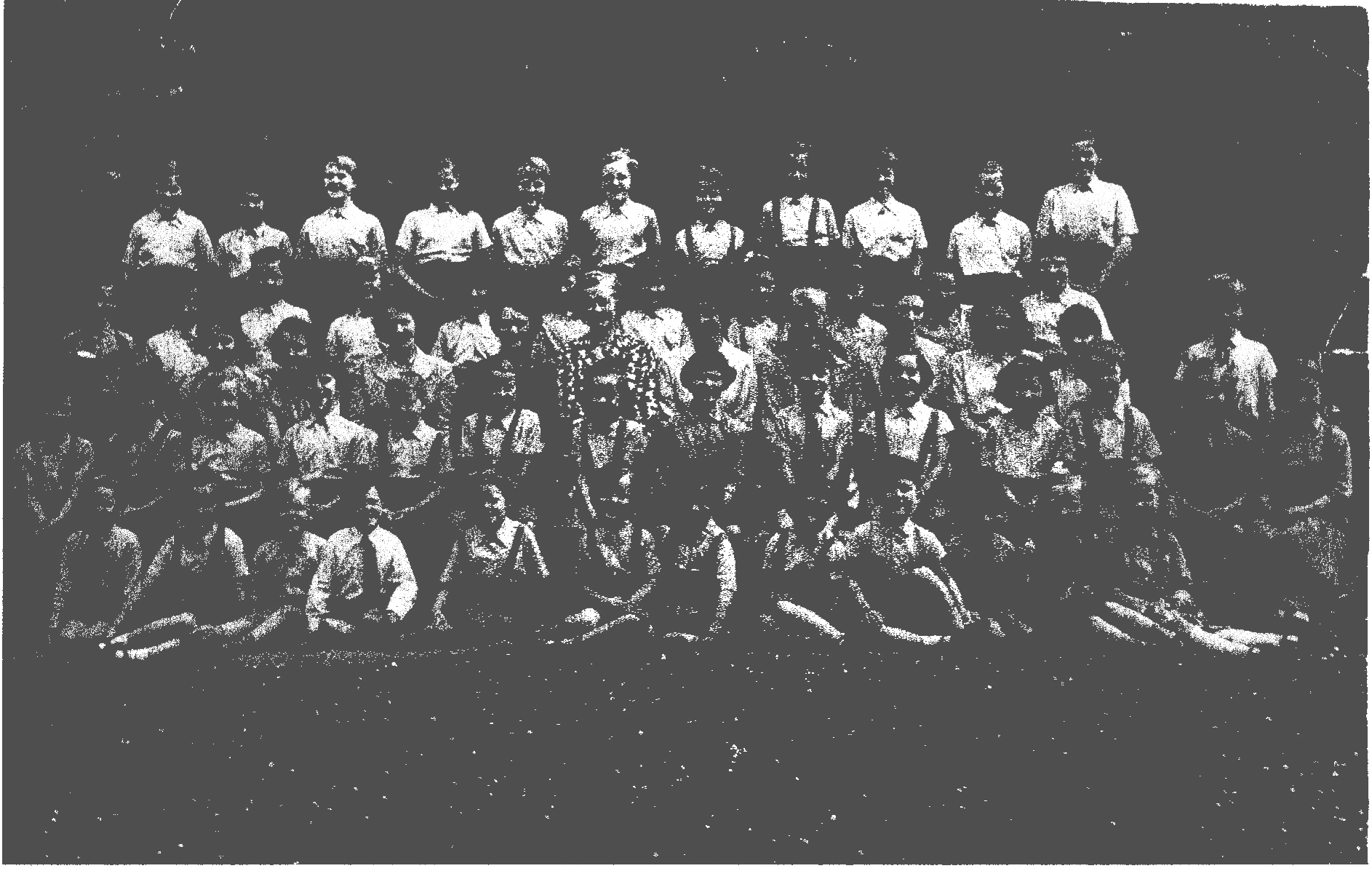
I was born in Hawkshead in 1952. My family were Quakers, and we went to Colthouse Quaker Meeting just outside Hawkshead. The first school I attended from the age of 4 was in Far Sawrey (near Hawkshead), a small school with around 20 pupils.
In 1960, when I was 8, my family moved to Ambleside, and I started attending Fairfield PNEU School in Rydal Road. On arrival in Ambleside my parents, along with two other families, started up the Ambleside Quaker Meeting in Rydal Road, which continued there until 2006 when it closed.
School Life
Fairfield was also a small school of about 50 to 60 pupils, and mostly girls. I was there for two years until it closed in the summer of 1962, and then I went to Ambleside Junior School for the last year of my primary education, before going on to Kelsick Grammar School in 1963 and then the Lakes Secondary School in 1965 (when Kelsick School closed to merge with two other schools to form the new Lakes School) which was one of the first comprehensive secondary schools in the country.
At Fairfield, I had my first experience of a school uniform. We wore a grey pleated gymslip over a white blouse with grey knee length socks, a yellow and gold striped tie, a grey blazer, and a grey beret. We had a school badge sewn onto the blazer, with the school motto “I am, I can, I ought, I will." On Tuesdays I went to Brownies as part of the school day, so on Tuesdays I wore my Brownie uniform – a brown dress and matching beret, with a gold tie and belt. My Dad said he always knew when it was Tuesday as I would always turn up at breakfast in my Brownie uniform.
Most of the pupils at the school were boarders, with families living in different parts of the world (one girl’s parents were in Borneo). I was one of very few day pupils. The boarders all lived in the building called “Helvellyn” and we all went in there every day for our midday meal, into a big room upstairs. On the first day I was surprised that although we each had a knife and fork, no one ever seemed to use their knife; it was fork into the right hand, and that was that, even when there was meat to cut where a knife would have been very useful! I was anxious to fit in, so I managed to cut everything with my fork.
Lessons
We had most of our lessons in the house on the hillock, “The Knoll.” The headmistress was Miss Mumford, and I also remember my form teacher Miss Halliwell and my music teacher Miss Bore (both of whom became very friendly with my mother), and the maths teacher, Mrs “Mac.” I got into a bit of trouble with Mrs Mac, partly because when I started at Fairfield, I was behind in maths as my new form had got to a stage that I hadn’t reached in my previous school, and it took me a fair while to catch up. Also, I was completely unaware of the concept of “prep” (doing homework after school) and I kept getting behind with that too. That problem was fixed when someone suggested that I could do my prep with all the boarders, which they all did straight after lessons in the “hut” between the “Helvelllyn” building and the Knoll, and then I could go home and have the evenings free, as I had been used to before. In prep, we did exercises that reinforced what we had learned in classes that day. We also had Brownies and PE in the hut.
Some things I did at Fairfield which I hadn’t done previously:
Picture Study. We were all given a copy of the same painting to look at which we did in silence for what felt like a very long time, and then talked about it. I remember studying the Arnolfini Portrait by Van Eyck.
French. This was another subject where I began very much “behind” (not having done any before!) and had to catch up.
Singing in parts. I remember the whole class singing “The Trout” by Schubert, which I liked very much, and also at Christmas my favourite was the “Zither Carol” which we sang in parts – I was the zither: “boom zing zing, boom zing zing” all the way through! Great fun. Most of the girls, including me, also took individual piano lessons.
Poetry – both studying it, reading it for pleasure, learning large chunks of it and reciting at an end of term evening for parents and friends, and also writing it. Once we studied a poem and then tried to write our own poem in the same style as the one we had read. I learned and recited the whole of the “Jackdaw of Rheims”, and a favourite poem of mine began “What is this life if full of care, we have no time to stand and stare?”
Nature Study. We each had our own Nature Note Book which had alternate lined and unlined pages, lined for writing about what we had seen and unlined for drawing and painting in it. Sometimes we used to walk from the school down to the river by Miller Bridge with our nature note books and pieces of charcoal; we sat all along the riverbank and sketched the water and whatever else we could see, then went back to school to paint them in.
Narration. We read a book aloud in class, each person taking turns to read. Then the teacher would ask one person to “narrate” i.e. say in her own words what had just happened in the passage we had just read.
Being read to. We had a book, “The Wind on the Moon” by Eric Linklater, and each day (or week)?) we all sat in a circle and the teacher read us one chapter aloud. I loved this, except that I got so involved in the story that I found it very hard to wait till the next time to find out what happened next!
Pottery. In pottery classes we each had a lump of clay, and at first we were taught how to make a simple pot, and then we made something of our own choice. I made a cow, which started off standing up, but eventually had to lie down, as it wouldn’t stand up properly. The things we made were fired in a kiln, and then we painted and glazed them with varnish.
Needlework. I remember learning different stiches, and then making a sampler in coloured sylko, showing the various stitched.
