October 31, 2026
Christmas Bird Count - Part 1 by Melissa Dowland
From Walks with a Naturalist Vol. 1


The following post is taken from Walks with a Naturalist Vol. 1, a collection of nature stories for children by naturalist Melissa Downland and published by the Charlotte Mason Institute. It is used in Alveary's Grade 1 Science curriculum but an enjoyable read for any age.
Christmas Bird Count - Part 1
Every year just after Christmas, Mike and I count birds for the Christmas Bird Count. The Christmas Bird Count has been happening every Christmas season for more than 125 years. Lots of people, like Mike and I, count birds and share those numbers with scientists. This helps scientists study changes in bird populations and habitats.
For our Christmas Bird Count, we go to one of our favorite places in North Carolina. It is called Pocosin Lakes National Wildlife Refuge. The purpose of the refuge is to provide habitat for waterfowl that spend the winter there. Waterfowl are birds like geese and ducks that spend a lot of their time on the water. At the refuge, there are wet areas where the waterfowl rest and feed.
Mike and I go to our favorite spot to count. The dark, shallow water is covered with big birds. They are tundra swans. Some birds are all white except for their black beak and a small yellow patch in front of their dark eye. Those are the adult swans. Other birds are mostly gray with a pink beak. Those are the cygnets, young swans.
We start to count... one, two, three. Soon we are counting hundreds... one hundred, two hundred, three hundred. Then we are counting thousands. One thousand, two thousand, three thousand... We count twenty thousand tundra swans!
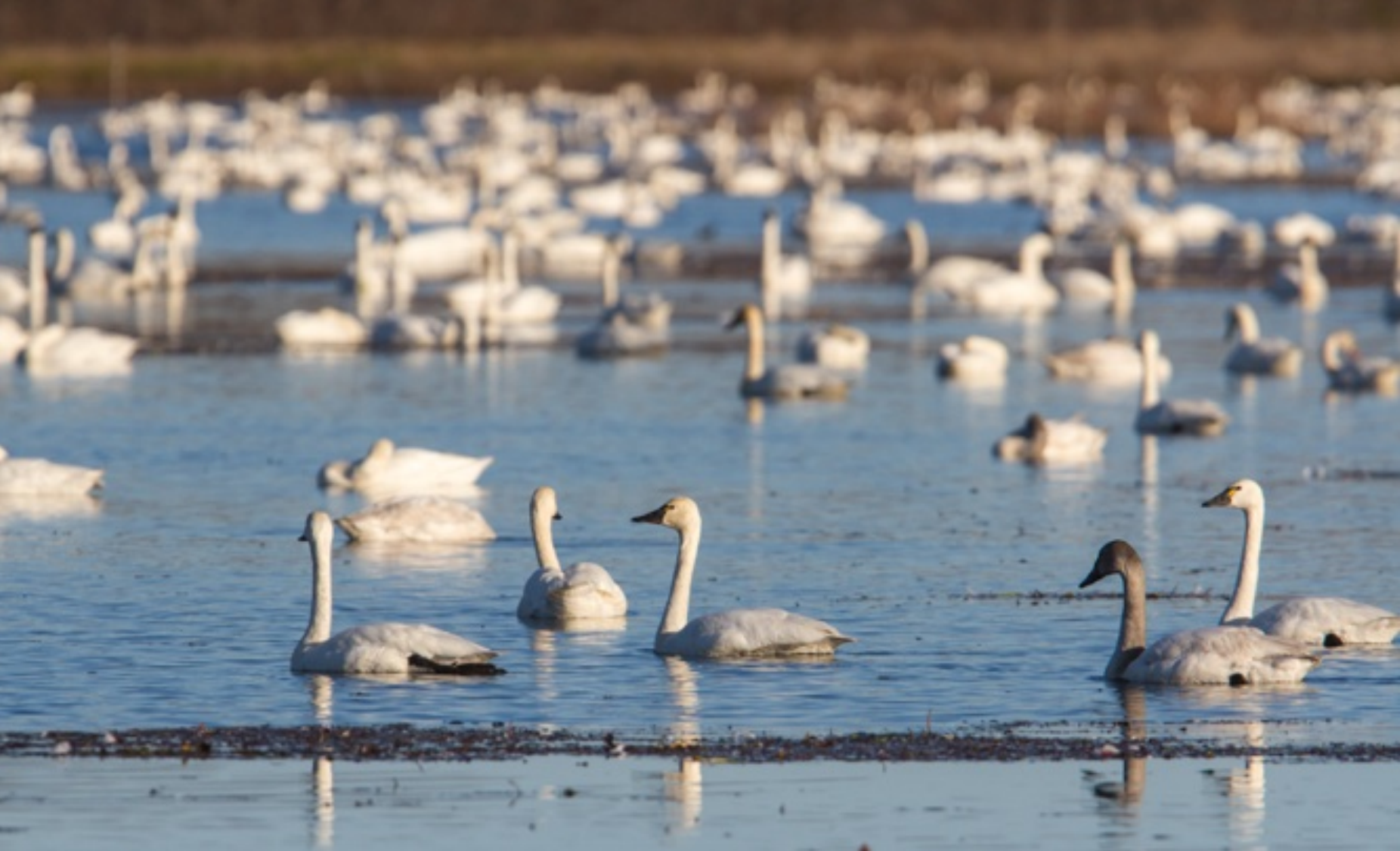
Tundra swans © MELISSA DOWLAND
The sound of the swans is loud. It almost sounds like a very busy day in the city... but filled with hooting and whistling instead of car engines and people talking. What an amazing natural spectacle!
Terms
Habitat: A habitat is the environment where an animal makes its home.
Pocosin: A pocosin is a type of habitat. It is a boggy area with very mucky soil. It is a place where lots of evergreen shrubs grow. Pocosins are found in the coastal plain of the southeastern US.
*As an Amazon Associate we earn from qualifying purchases via Amazon links at no additional cost to you.
